
The 50 Most Useful English Phrasal Verbs
50 practical phrasal verbs organised by real-life situations, not alphabetically — with example scenes, usage notes, and tips for making them stick.
Actionable ESL guidance across skills and levels.
50 practical phrasal verbs organised by real-life situations, not alphabetically — with example scenes, usage notes, and tips for making them stick.
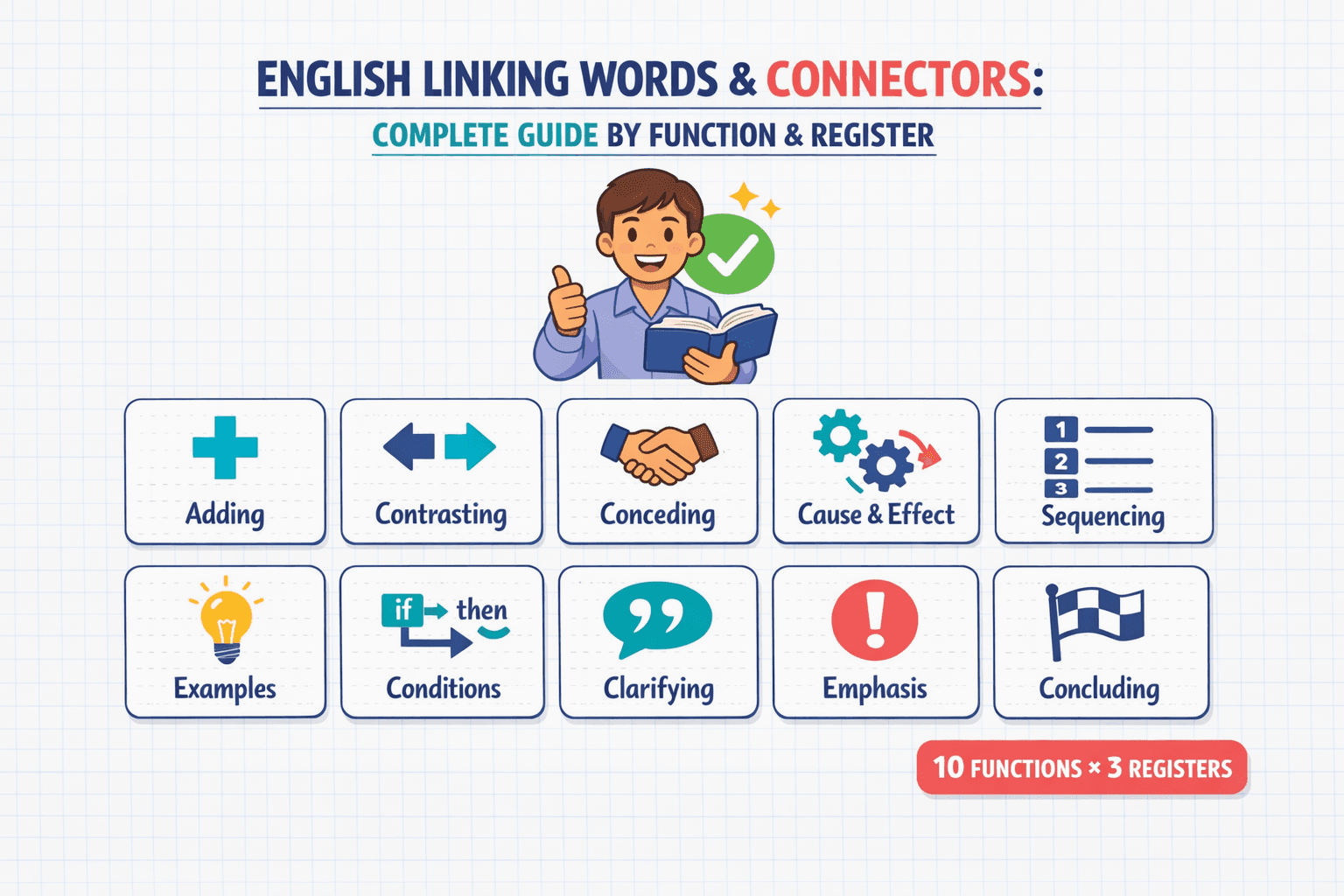
Master English linking words by function and register. Tables covering 10 categories, three register levels each, with usage notes, common traps, and a real before-and-after example showing what strong connector use actually looks like.
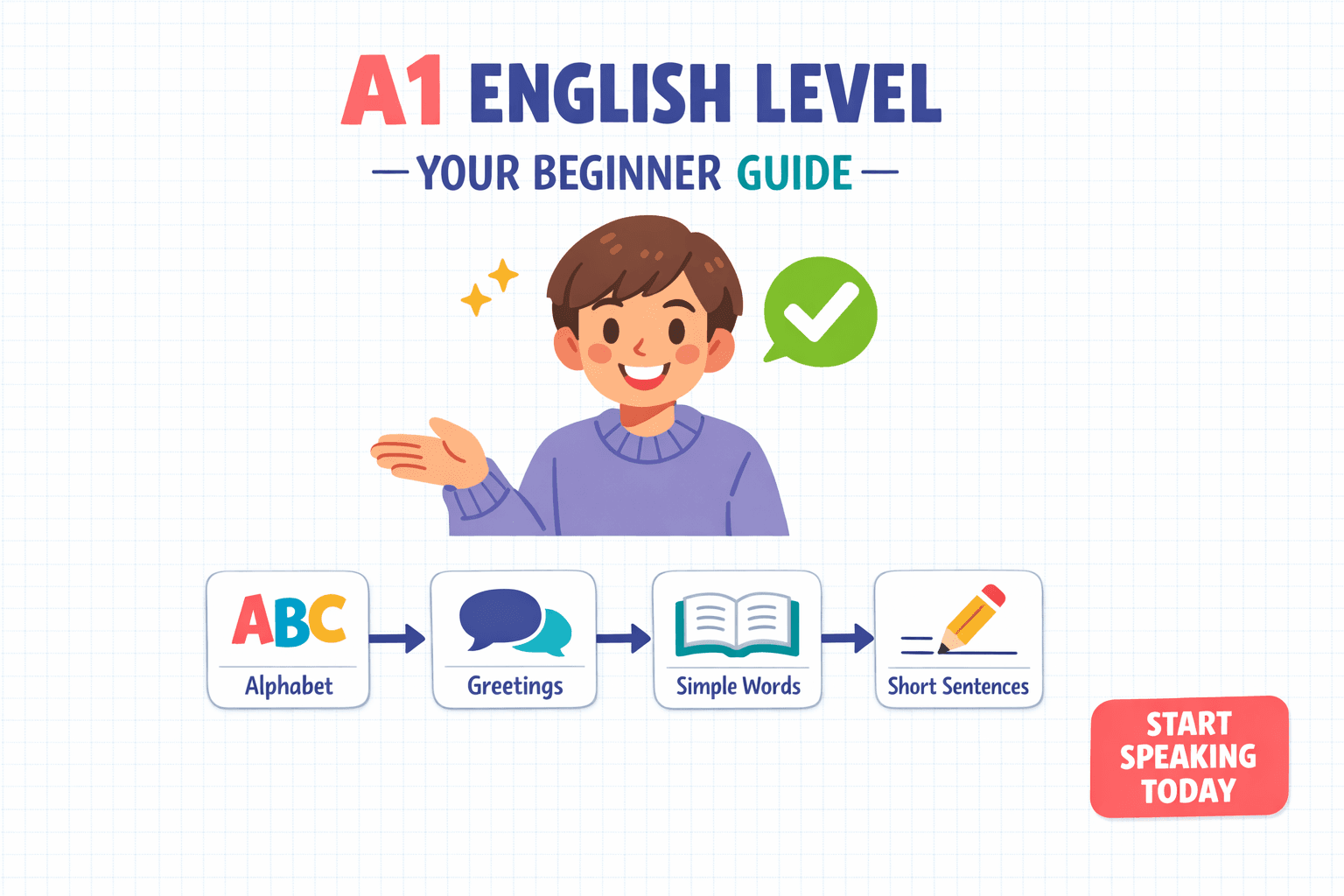
A practical guide to the A1 CEFR level — what it means, the five grammar topics to master, which 300 words matter most, and how to reach A2.
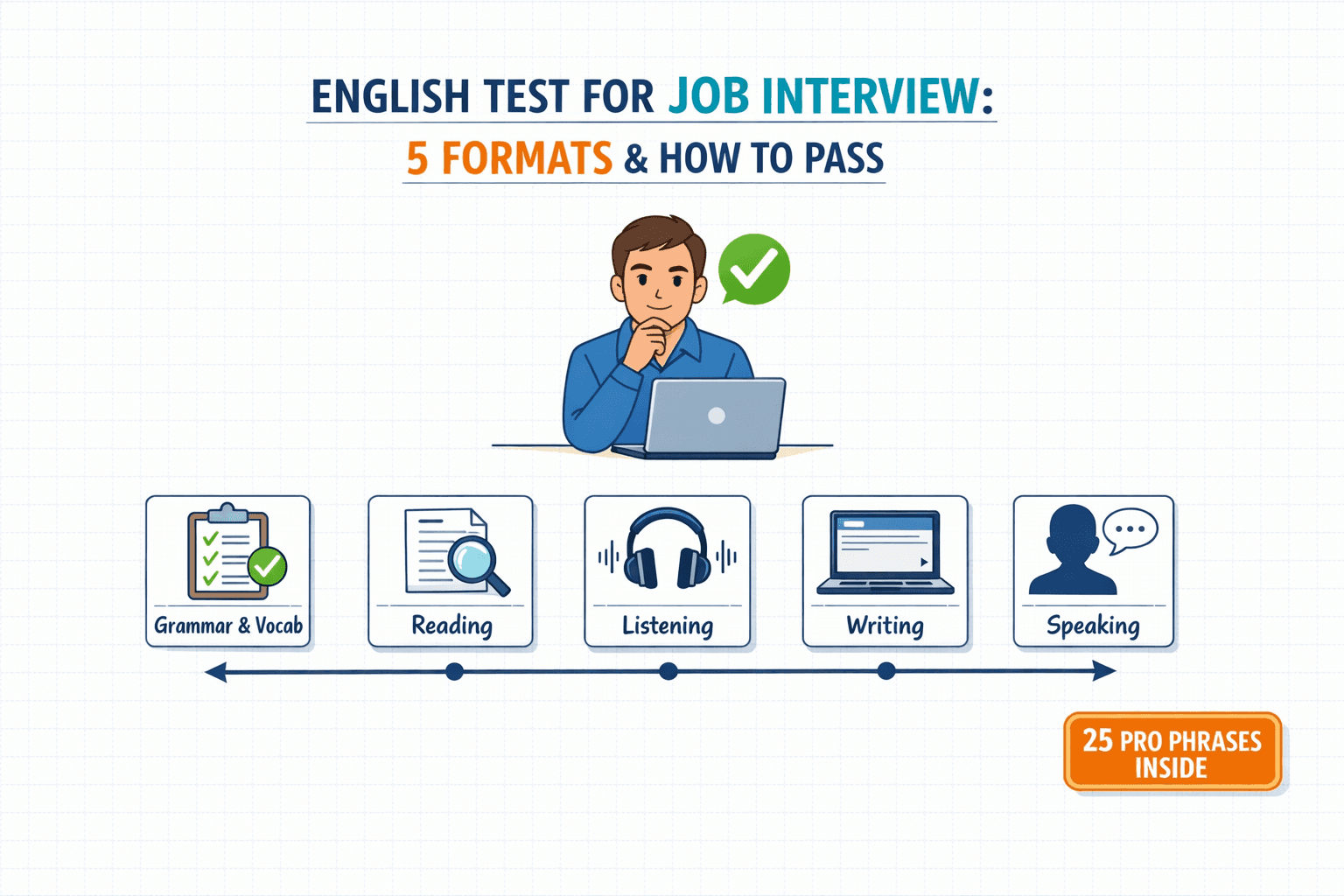
Break down the five English test formats companies use in hiring, with targeted prep strategies and 25 workplace phrases that make you sound professional without sounding rehearsed.
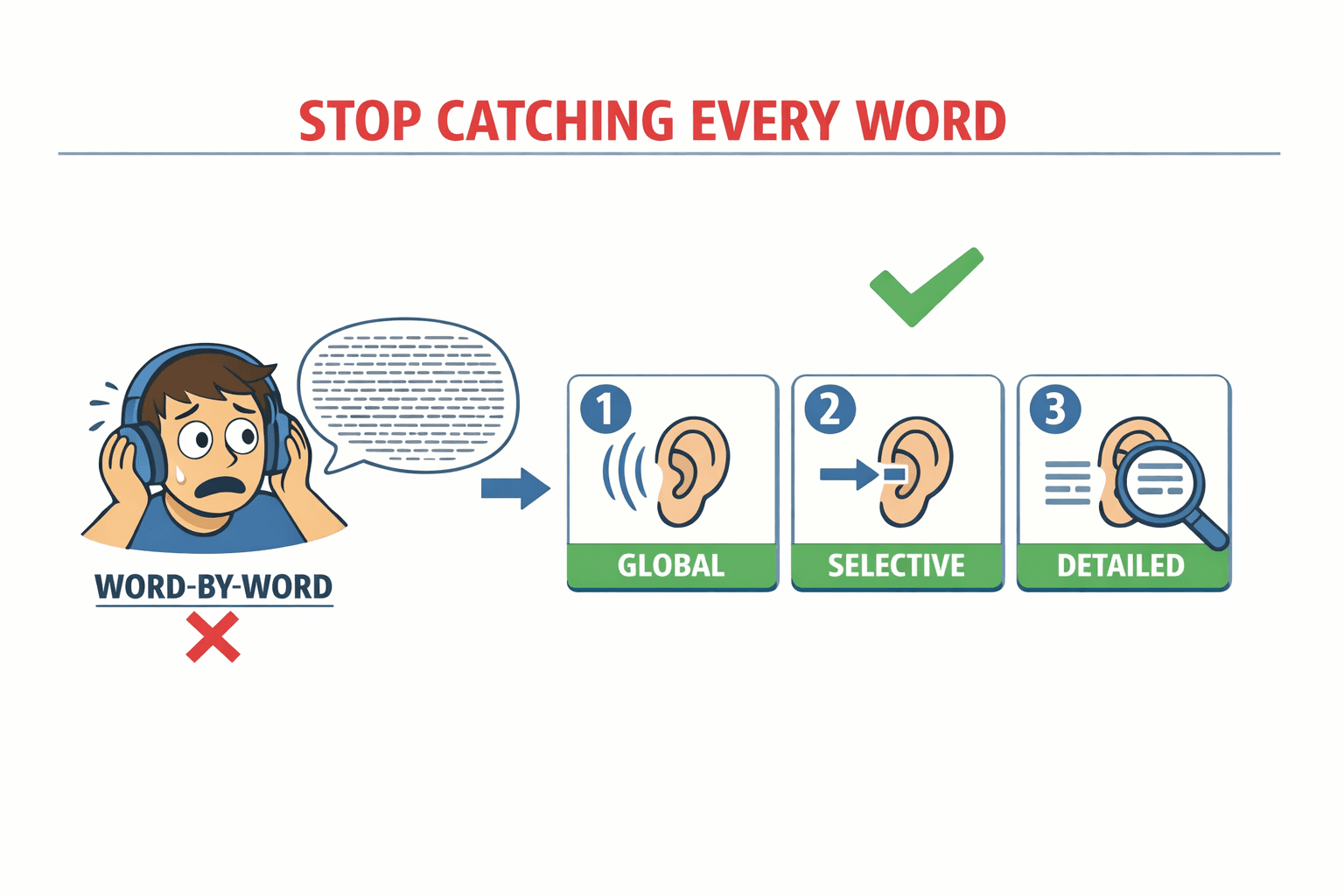
Why chasing every word kills your comprehension — and the three listening modes that actually work.
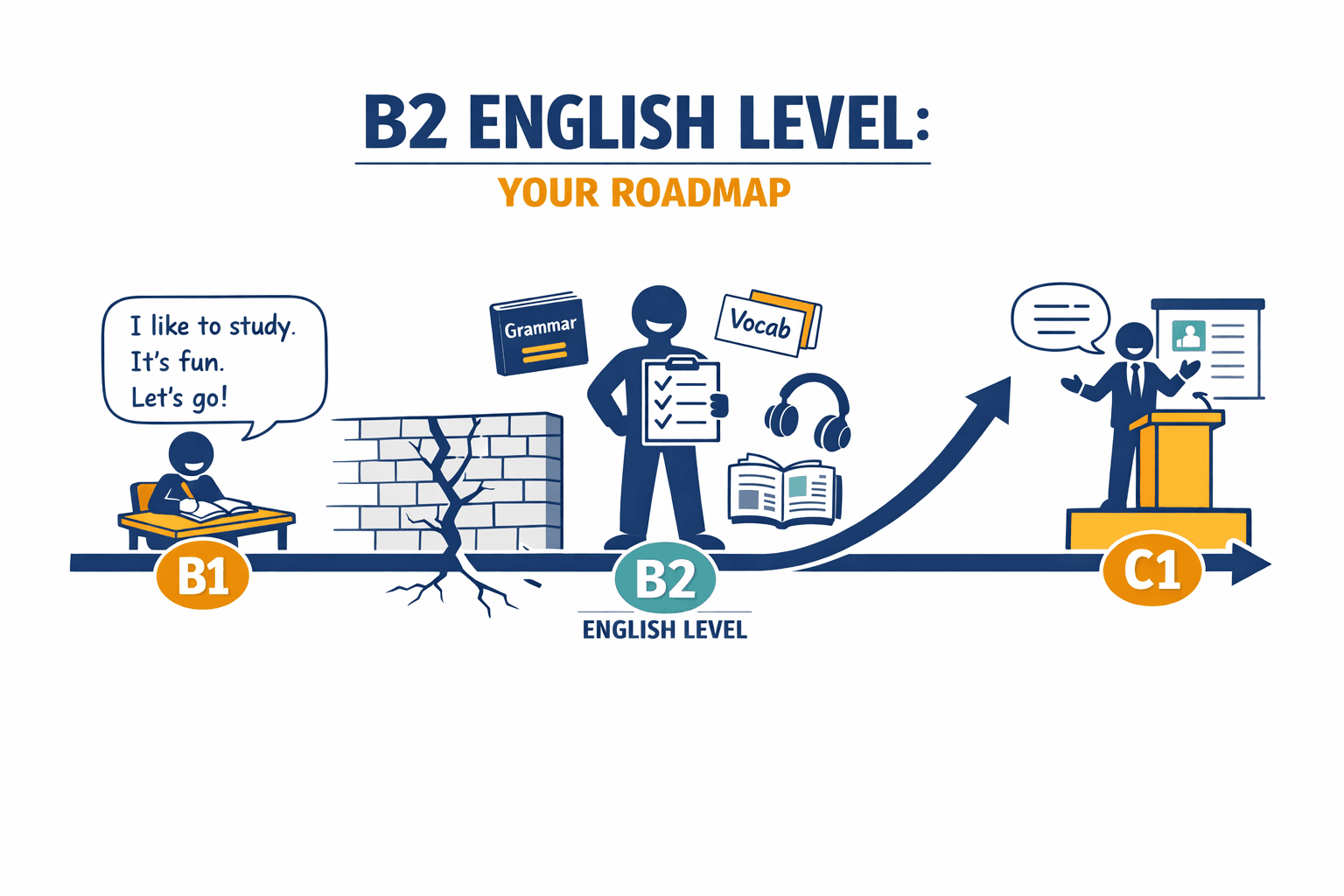
A practical roadmap through B2 English - the grammar that blocks progress, vocabulary collocations that matter, and a checklist to find your weak spots.
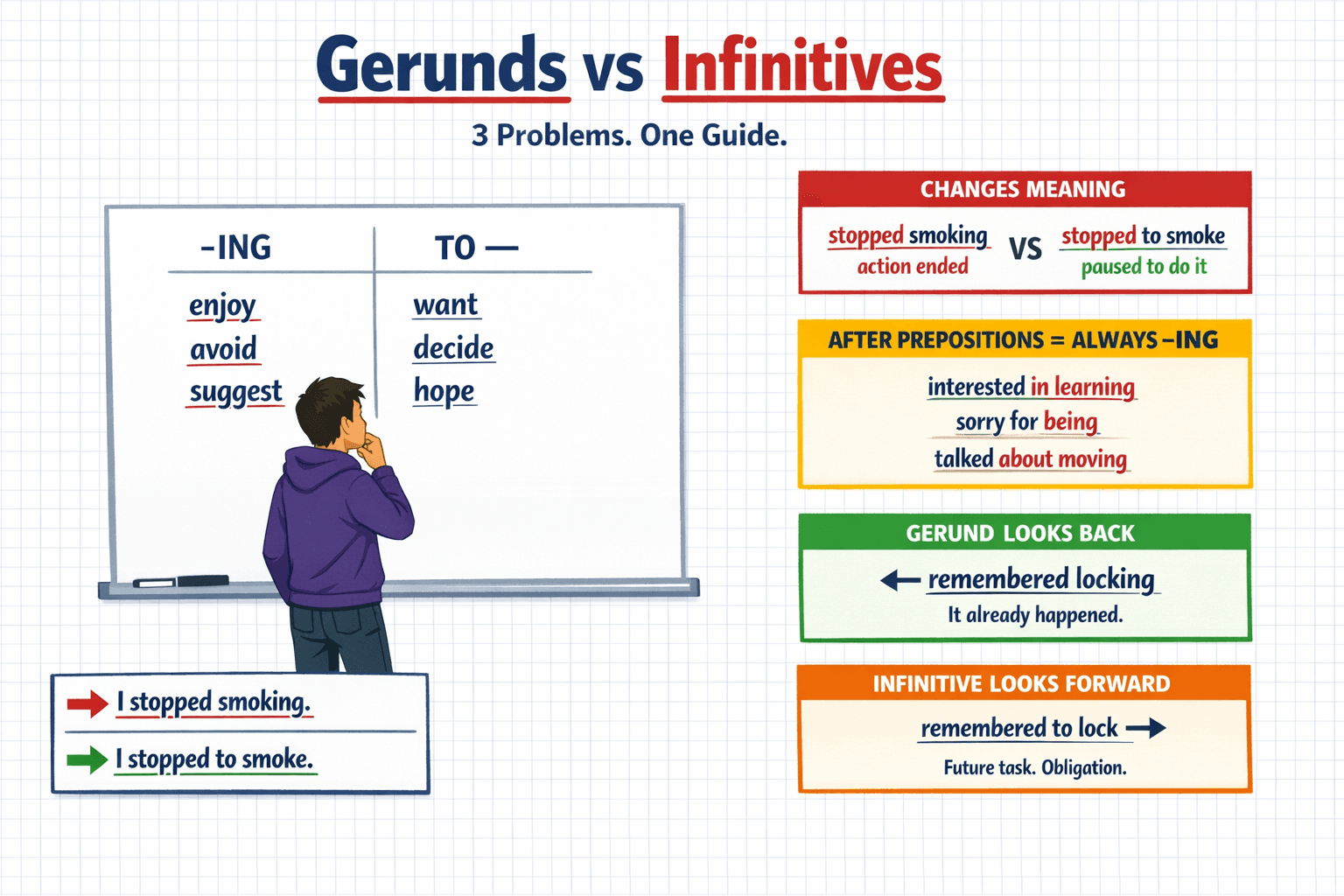
Gerunds vs infinitives isn't one grammar problem — it's three. This guide separates them, explains the logic behind the meaning-change pairs, and tells you exactly where learners at B1, B2 and C1 go wrong.
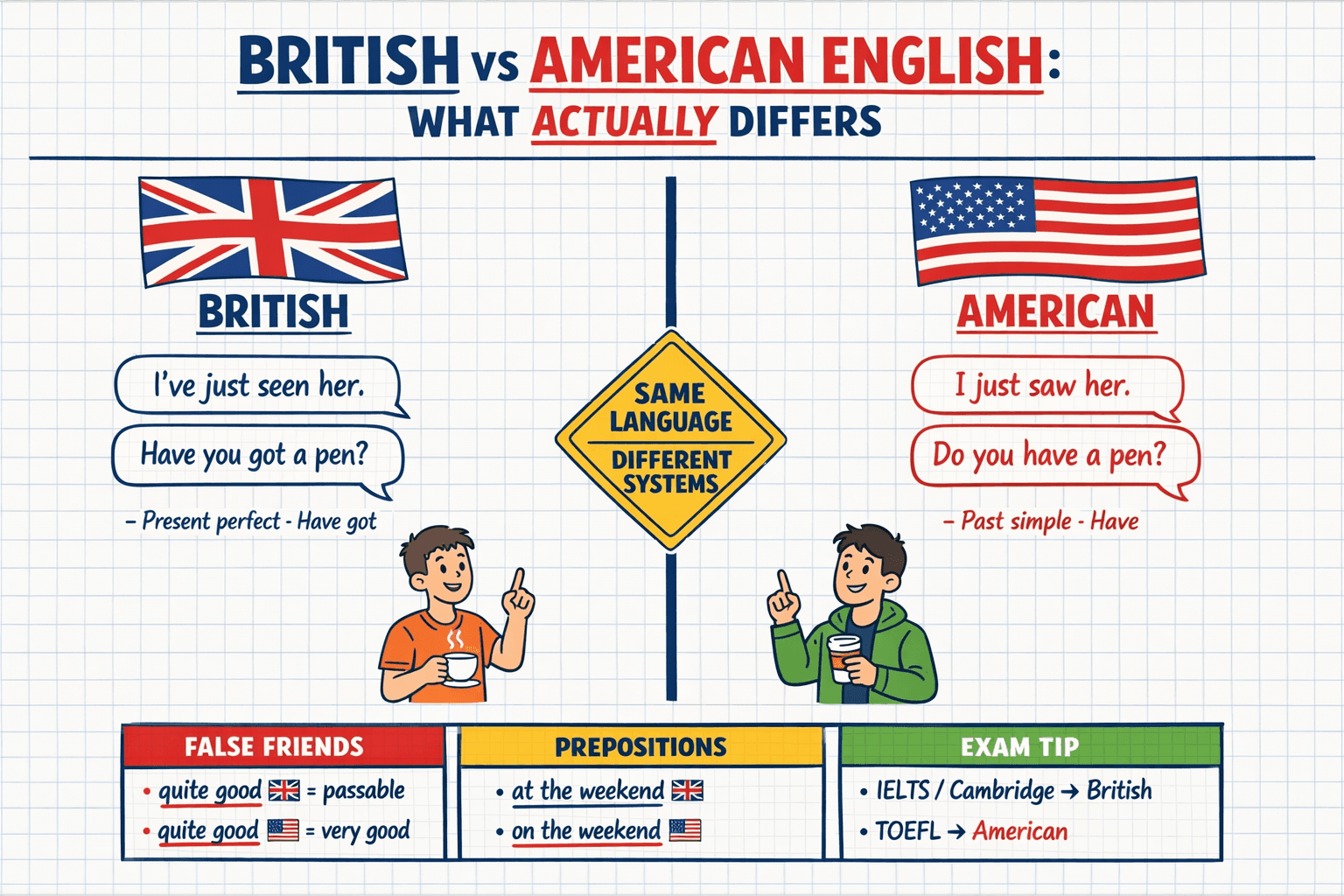
Same language, different systems. Here are the British vs American differences that matter — the ones that affect your exam, your writing, and your credibility.
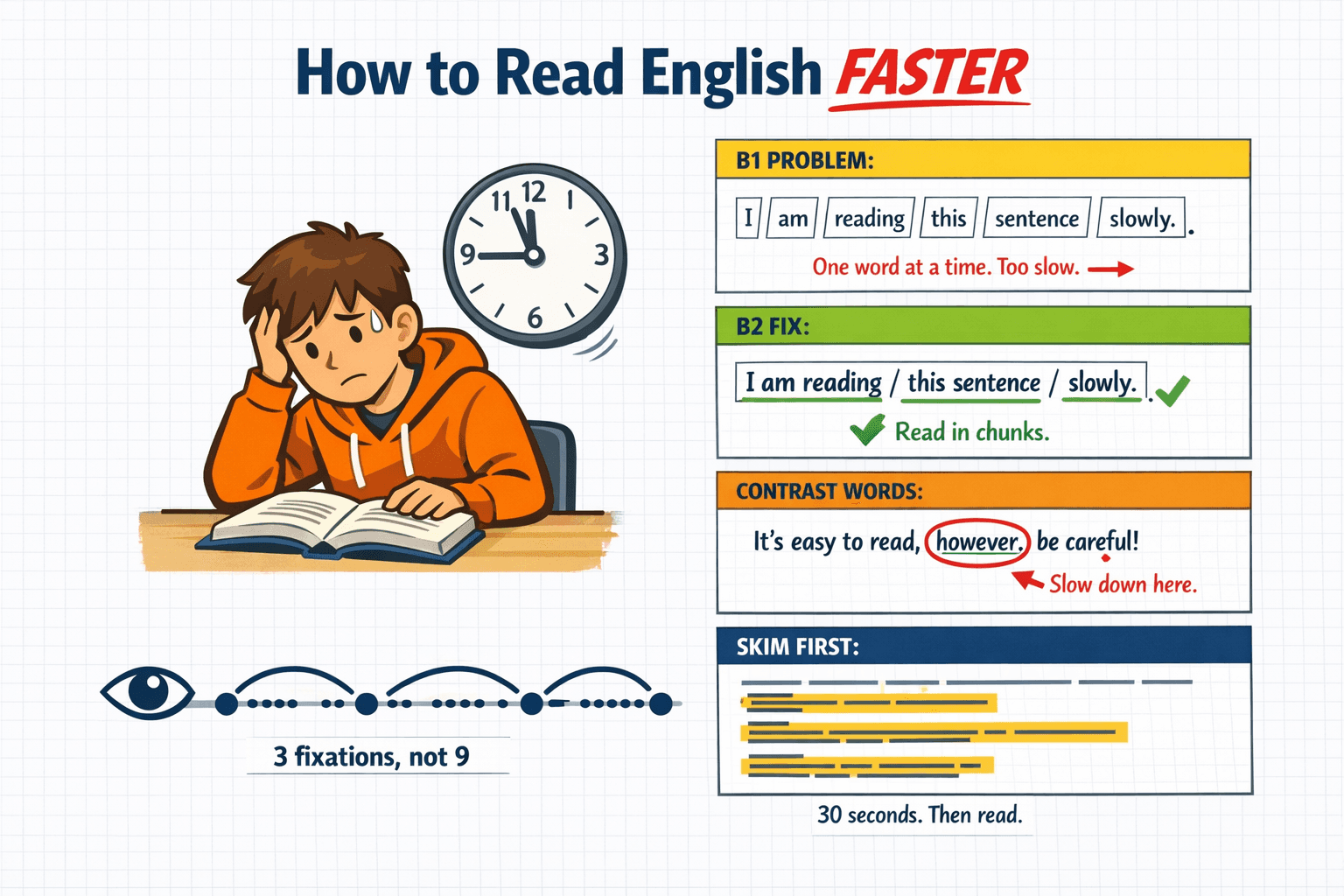
Slow reading at B1 is not the same problem as slow reading at B2 or C1. This guide diagnoses which layer is holding you back — and gives specific drills to fix it.
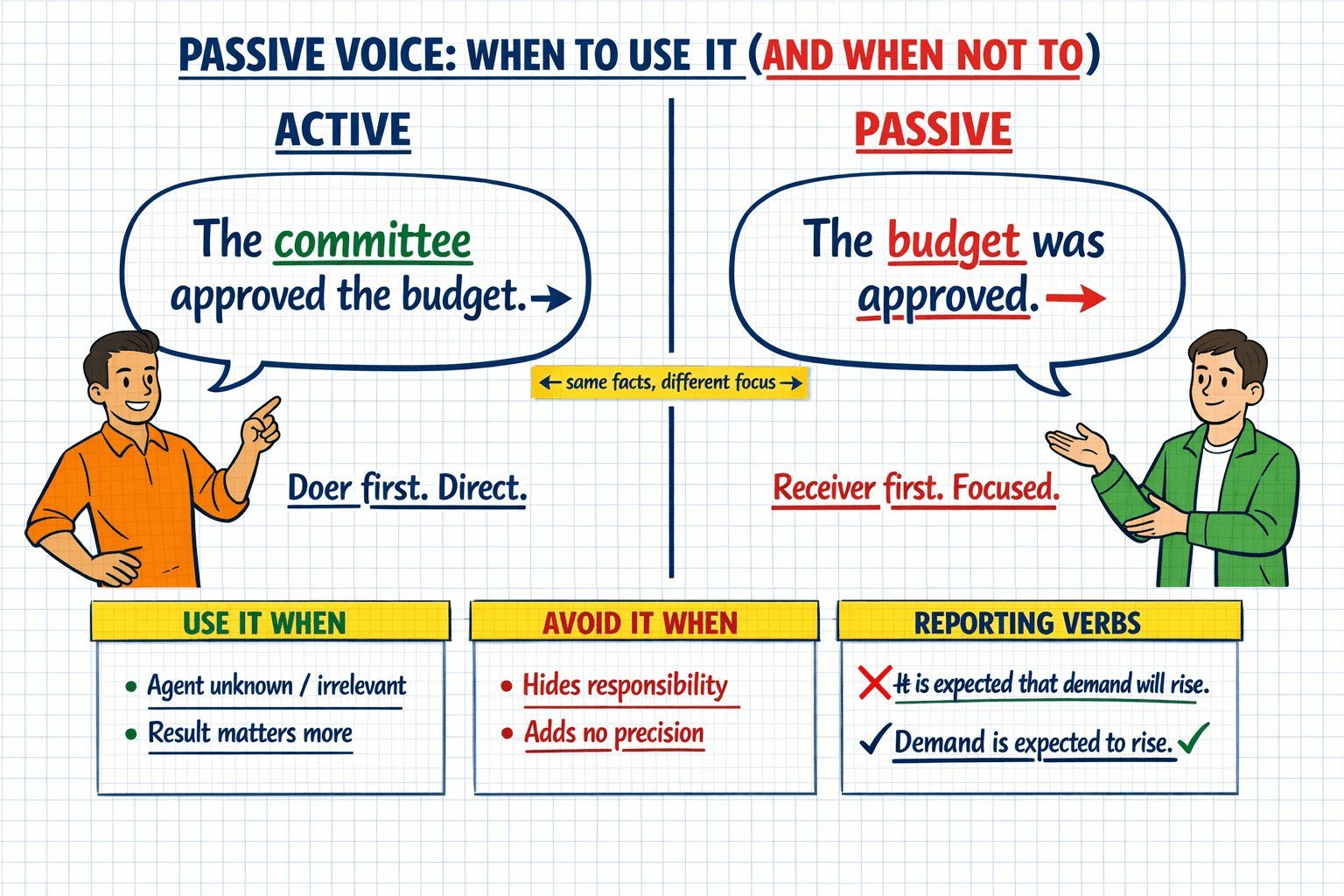
Every style guide tells you to avoid it. Here's why that advice is half wrong — and how to use the passive voice with actual precision.
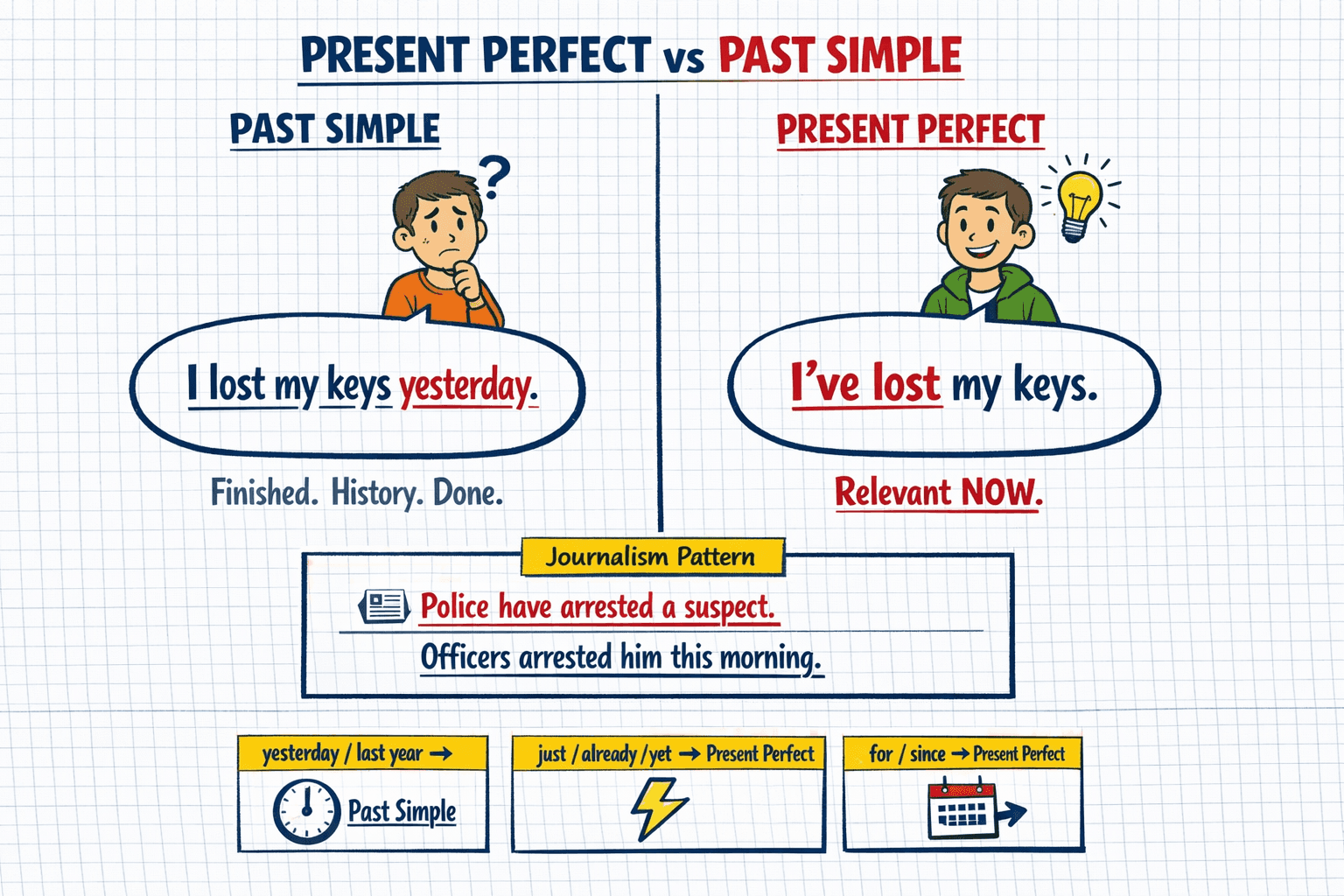
One rule explains the whole thing. Here's how native speakers actually choose between these two tenses — with 50 real examples sorted by pattern.
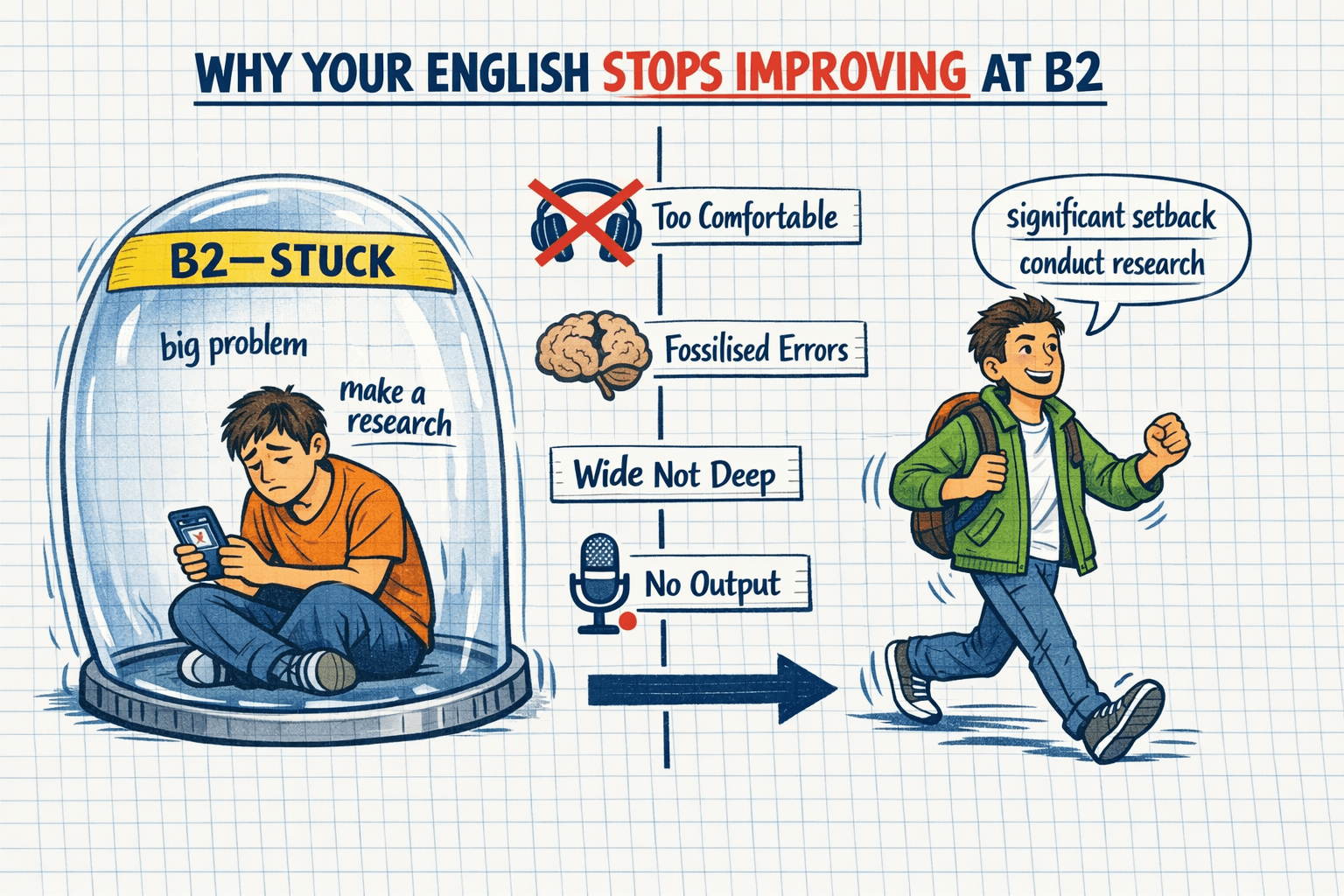
Your English works. That's exactly the problem. Here's why functional B2 is a trap, and the four concrete habits that break it.
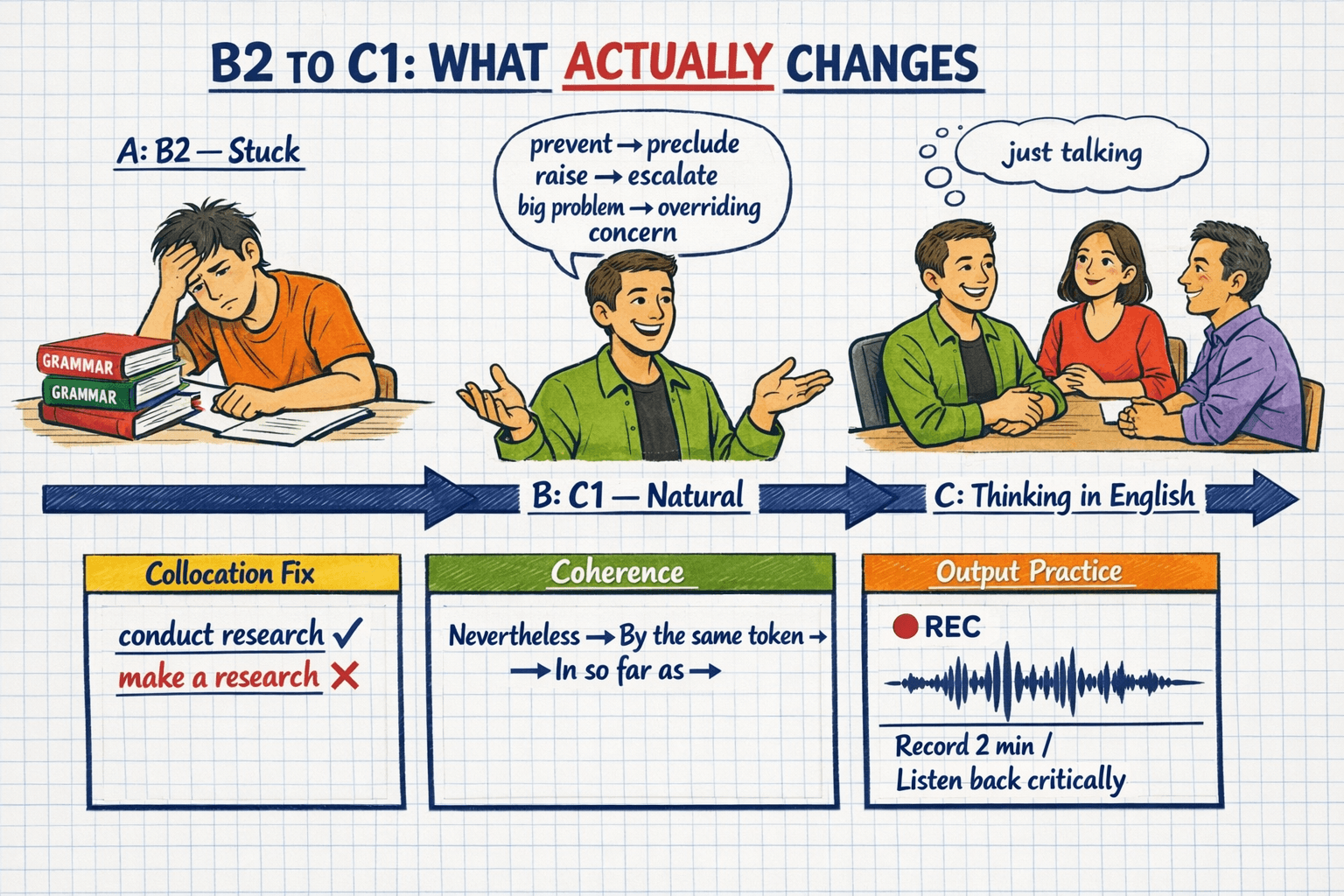
The jump from B2 to C1 isn't more of the same — it's a different kind of study. Here's what actually changes and how to close the gap.
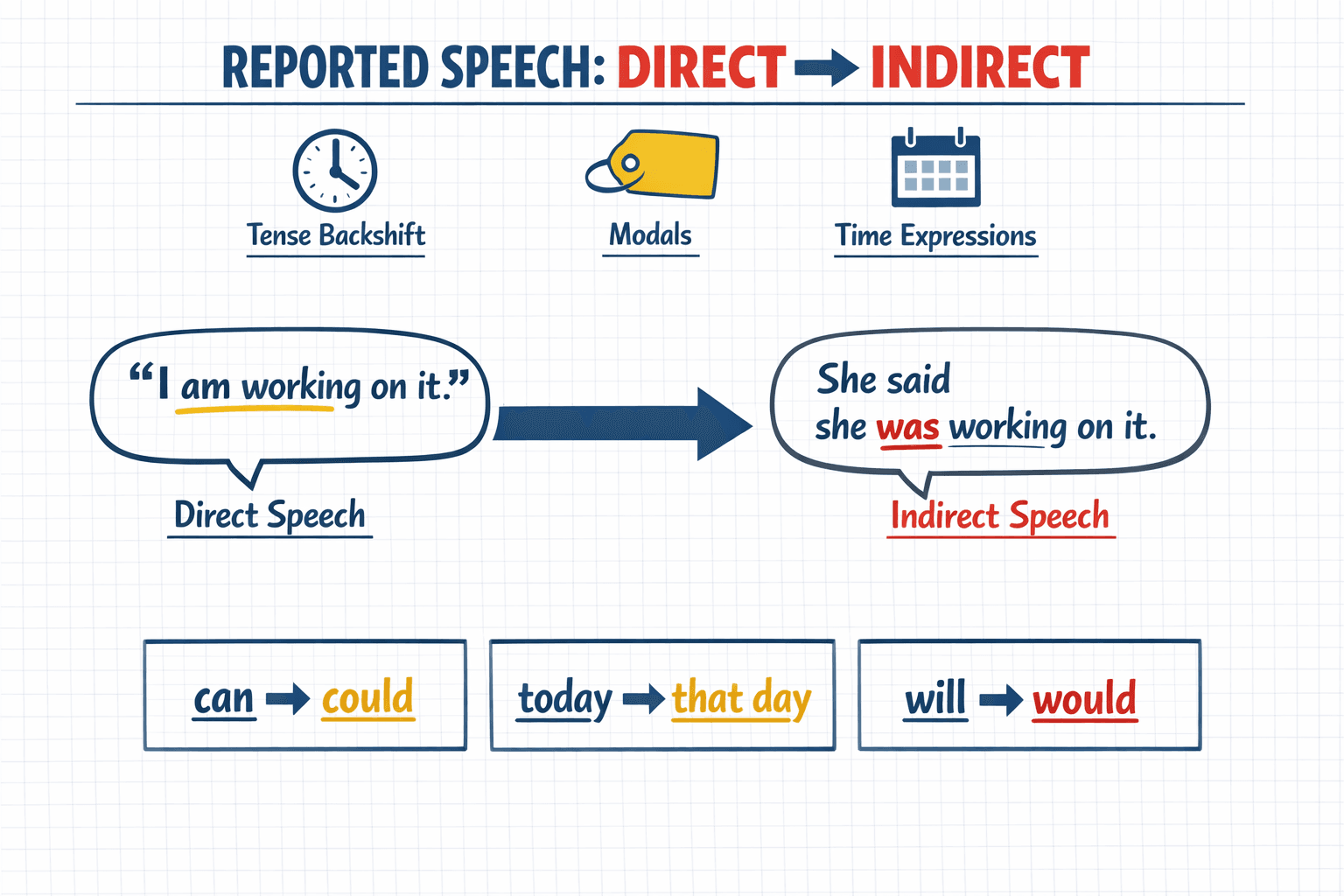
A complete B2-level guide to reported speech in English — covering every tense backshift, modal verbs, reported questions, time expressions, the say/tell rule, and indirect commands, with 40 worked examples drawn from real-world contexts.
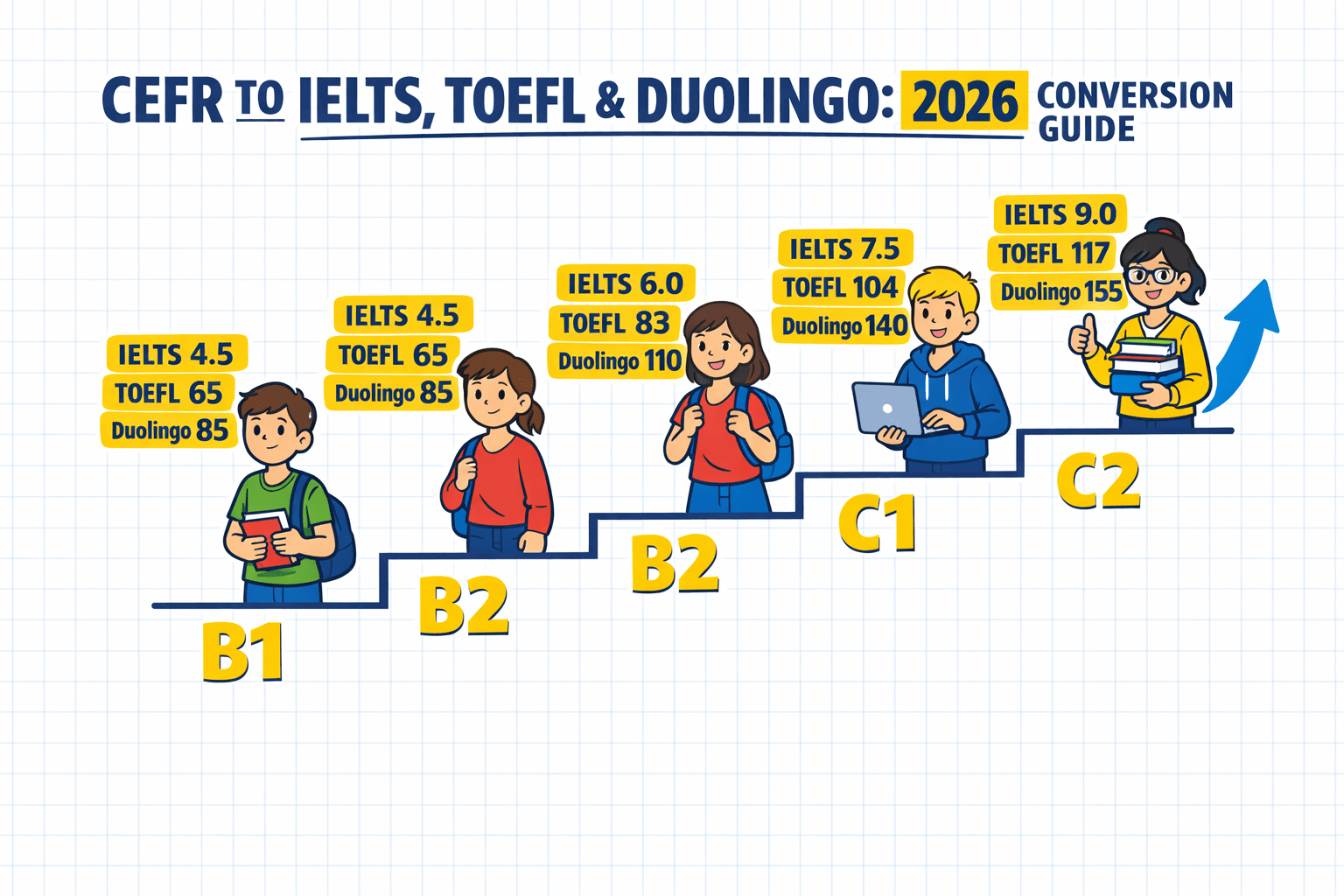
A complete 2026 reference guide mapping CEFR levels to IELTS bands, TOEFL iBT scores (both the new 1–6 scale and the legacy 0–120 scale), and Duolingo English Test scores. Includes sourced conversion tables, a practical breakdown of what each level means in real academic and professional contexts, and a goal-by-goal guide to choosing the right test for university admission, immigration, professional licensing, or employment.
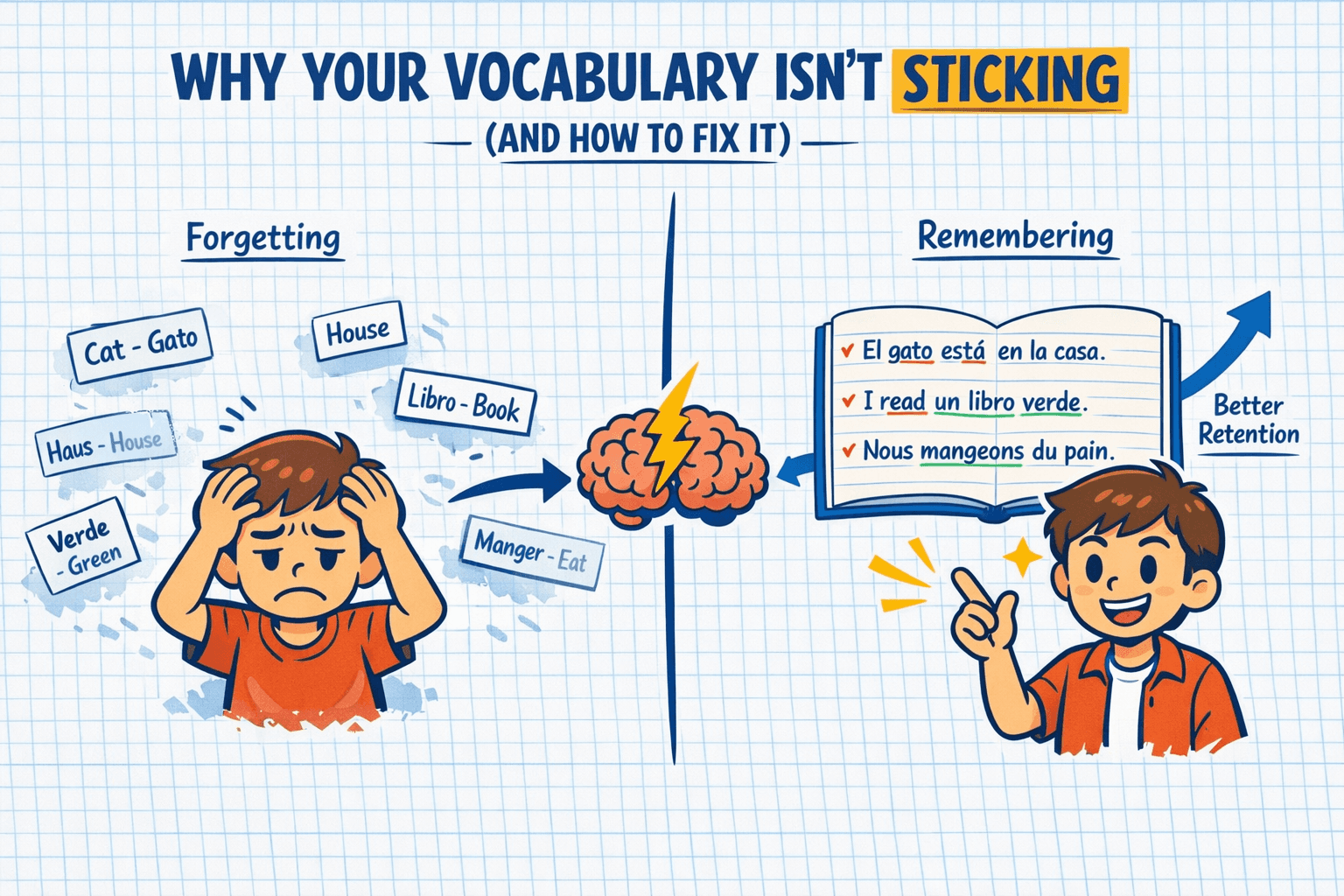
Most vocabulary learners study the wrong way — memorising isolated words that disappear within a week. This guide explains why spaced repetition and contextual learning work, and gives you a practical three-phase daily system to make new words stick for good.
How long does it take to reach B2 English from B1? Real CEFR hour estimates, daily study timelines, and why most learners undercount their actual progress.
This guide covers IELTS, TOEFL, and the Duolingo English Test (DET) - the three tests that between them dominate the "which English exam should I take" decision in 2026. If you're only reading comparisons of the first two, you're missing the story.
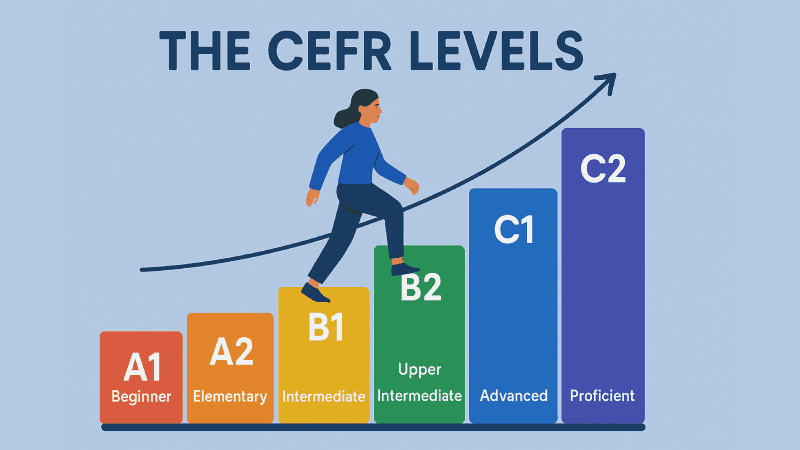
The CEFR levels (A1, A2, B1, B2, C1, C2) categorize your English proficiency from beginner (A1) to near-native fluency (C2). Each level clearly defines your language skills, helping you set realistic goals and measure progress, especially for exams like IELTS and TOEFL. Let's explore what each stage means practically for your learning journey.