
Decoding the English Puzzle: What's the Real Difference between A1, A2, B1, B2, C1, and C2?
Published on February 19, 2026 • 5 mins read
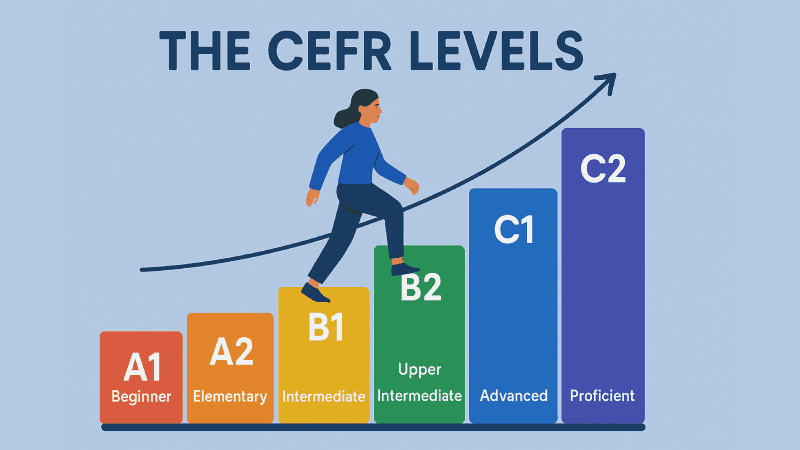
The CEFR levels (A1, A2, B1, B2, C1, C2) categorize your English proficiency from beginner (A1) to near-native fluency (C2). Each level clearly defines your language skills, helping you set realistic goals and measure progress, especially for exams like IELTS and TOEFL. Let's explore what each stage means practically for your learning journey.
Understanding the CEFR Levels: The Basics
The CEFR framework categorizes your English skills into six distinct stages:
-
A1 (Beginner): You're just starting. Simple sentences and daily phrases are your friends.
-
A2 (Elementary): Slightly better. You can handle straightforward conversations and essential daily tasks.
-
B1 (Intermediate): Congrats, you're halfway up! Now you can comfortably chat about familiar topics.
-
B2 (Upper Intermediate): You've entered the "fluency zone." Complex interactions? No sweat.
-
C1 (Advanced): You're sharp, sophisticated, and can handle academic and professional environments with ease.
-
C2 (Proficient): You've made it to the peak—native-level fluency. English is basically your second skin now.

Frequently Asked Questions (FAQs)
1. What's the real difference between these CEFR levels?
The real difference between CEFR levels is in the practical language skills and fluency you have at each stage. A1 English vocabulary and grammar requirements are basic—think introducing yourself, asking simple questions, or ordering coffee. At the beginner vs intermediate English level (A2 to B1), you start handling everyday interactions with more confidence, like shopping or casual conversations.
Moving from B1 vs B2 English proficiency differences means you're ready for more complex interactions, such as expressing opinions clearly and discussing familiar topics in detail. Achieving advanced English level skills (C1 and C2) allows you to handle nuanced academic discussions, professional contexts, and sophisticated topics effortlessly.
In short, progressing from A1 to C2 takes you from simple communication to near-native mastery, essential for university admissions, immigration requirements, or professional work in English-speaking environments.
2. How do I determine my English proficiency level?
To accurately determine your English proficiency level, you can start by taking a reliable online self-assessment test, which gives you a quick idea of where you stand.
For official purposes—such as English proficiency for university entrance, immigration, or professional employment—you should take recognized language proficiency tests like IELTS, TOEFL, or Cambridge English exams. These tests clearly map your skills against the international CEFR English level descriptors, providing an accurate benchmark of your current abilities and guiding your path from intermediate to advanced proficiency.
3. What English level do I need for university or studying abroad?
If you're planning on studying abroad or university admission, you'll typically need at least a B2 English level (Upper Intermediate), which demonstrates that you can confidently engage in academic coursework and daily campus interactions.
However, more competitive institutions—such as top universities in the UK, US, Canada, or Australia—often require an advanced English level (C1), ensuring you can fully participate in complex academic discussions, research, and writing assignments without difficulties. Always check the specific university’s website or admission criteria to confirm their exact required English level for admission.
4. How long does it take to advance from A1 to C2?
Realistically, achieving full proficiency—from A1 beginner to the near-native C2 English level—usually takes about 2 to 5 years. Your exact timeline depends significantly on several factors: the consistency of your practice, the intensity and quality of your study routine, access to immersive English environments, and your strategies for effectively moving from intermediate to advanced English.
Regular exposure, structured practice, and engaging actively with native speakers can dramatically accelerate your progress through each of the CEFR language progression stages.
5. What exams correspond to each CEFR level?
-
A1-A2: Cambridge KET, IELTS 2-3
-
B1-B2: Cambridge PET/FCE, IELTS 4-6.5
-
C1-C2: Cambridge CAE/CPE, IELTS 7-9, TOEFL 95+
6. Is B2 English considered fluent?
Yes, the B2 English level is generally considered the entry point to genuine fluency. At this stage, you can comfortably handle detailed conversations, express opinions clearly, and participate confidently in debates or discussions about various familiar and moderately complex topics.
While you might not yet master every nuance, your ability to communicate is robust enough to handle most everyday situations, academic contexts, and professional environments effectively. In short, achieving B2 means you've reached a significant milestone on your path toward advanced English proficiency.
7. What practical skills do I have at each CEFR level?
Check the handy table below!
| Level | Skills |
|---|---|
| A1 | Basic phrases, simple introductions |
| A2 | Simple interactions, routine tasks |
| B1 | Conversation on familiar topics, basic writing |
| B2 | Fluent conversations, detailed explanations |
| C1 | Complex topics, nuanced conversations, professional context |
| C2 | Near-native proficiency, academic and literary texts |
8. What English level do I need to work professionally?
For most professional roles in English-speaking environments, employers typically look for at least an upper-intermediate (B2) English proficiency level. At this stage, you can handle daily business conversations, write clear reports, emails, and documents, and confidently participate in meetings.
However, higher-level positions—especially those involving extensive communication, negotiation, or management—usually prefer an advanced English level (C1 or higher), as this demonstrates your ability to use nuanced language effectively and accurately in a professional context.
9. How do the English levels A1-C2 relate to IELTS and TOEFL scores?
Here's a quick cheat sheet:
| CEFR | IELTS | TOEFL (iBT) |
|---|---|---|
| A1 | 2-3 | Below 30 |
| A2 | 3-4 | 30-40 |
| B1 | 4-5 | 41-70 |
| B2 | 5.5-6.5 | 71-94 |
| C1 | 7-8 | 95-120 |
| C2 | 8.5-9 | Near-perfect |
10. What's the biggest difference between B2 and C1?
The biggest difference between B2 and C1 English levels lies in your mastery of nuanced vocabulary, complex grammar structures, and sophisticated communication skills. At B2, you're comfortably fluent and can express yourself clearly on a wide range of topics.
However, moving up to C1 advanced proficiency means you can handle highly complex ideas, interpret subtle meanings, engage confidently in professional or academic discussions, and produce well-structured, detailed written texts. In short, while B2 means you've "got it," C1 means you've truly "mastered it."
Tips to Move Up the CEFR Ladder
Want to climb higher?
-
A1 to A2: Practice daily routines, simple dialogues, basic vocab.
-
A2 to B1: Watch simple shows, read short stories, speak daily.
-
B1 to B2: Read books, watch series, interact in English groups.
-
B2 to C1: Engage in detailed debates, academic readings, write regularly.
-
C1 to C2: Immerse yourself fully—literature, professional writing, nuanced discussions.
Wrapping It Up: Your CEFR Journey
Understanding these CEFR levels clearly helps set your goals, guide your practice, and celebrate your progress. Whether you're climbing the English mountain for studies, immigration, or work, knowing exactly where you stand makes the journey less daunting.
Ready to discover your CEFR level and start your ascent? Let’s get climbing! I promise the view at the top—complete fluency—is well worth the climb.